


Valea Electronicii
Acum 7 ani
Imigranţii rusofoni au probleme de adaptare, unii sunt bănuiţi de activităţi neonaziste, iar alţii sunt acuzaţi că vor să domine viaţa politică israeliană.
Evreii proveniţi din fosta URSS au început să ridice statului Israel probleme cu care nu s-a mai confruntat până acum. Recent, opt israelieni bănuiţi de activităţi neonaziste au fost arestaţi la Petah Tikva, lângă Tel Aviv.
Tinerii, cu vârste cuprinse între 16 şi 21 de ani, proveneau din familii de emigranţi din fostele state ale Uniunii Sovietice. Autorităţile israeliene au constatat că nu au o lege prin care să condamne activităţile neonaziste pe teritoriul statului.
Mai mulţi deputaţi au cerut în parlament să fie modificată Legea întoarcerii, pentru a împiedica astfel de persoane să beneficieze de ea. Pe de altă parte, prezenţa în coaliţia de guvernare şi în Executiv a unui lider provenit din imigraţia rusă a stârnit valuri în Israel.
Actualmente, legea permite oricărei persoane considerate evreu să imigreze în Israel cu familia, inclusiv cu strănepoţii. Legislaţia israeliană stipulează că orice individ se poate prevala de rădăcinile evreieşti pentru a solicita cetăţenie până la a doua generaţie.
Deputatul din partea Partidului Religios Naţional, Zevulun Orlev, a cerut de mai mult timp un act normativ prin care să se revoce cetăţenia israeliană militanţilor neonazişti şi aceştia să fie expulzaţi. El mai doreşte scoaterea din Legea întoarcerii a clauzei care autorizează strănepoţii evreilor să emigreze în Israel şi să obţină cetăţenia chiar dacă Halakha (legea religioasă) nu-i consideră pe aceştia evrei.
"Acceptarea strănepoţilor face ca o a doua generaţie de nonevrei să vină în Israel. Aceste persoane nu sunt apropiate de spiritul iudaismului şi slăbesc caracteristicile evreieşti ale statului nostru" - susţine Orlev. Colette Avital, deputat din partea Partidului Muncii, se declară şi ea în favoarea revocării cetăţeniei în caz de activităţi neonaziste, dar nu doreşte modificarea criteriilor de naturalizare.
Opt israelieni proveniţi din familii de emigranţi din ... Colegul său din Knesset, Yossi Beilin, parlamentar al partidului de stânga Meretz-Yahad, se opune schimbării legii: "Israelul trebuie să-şi deschidă porţile tuturor acelora care sunt recunoscuţi ca evrei de Halakha. Nu există niciun motiv să împiedicăm copiii, nepoţii şi chiar strănepoţii să emigreze în Israel."
Propunerile de amendare a Legii întoarcerii au suscitat un val de contestaţii în rândul întregului spectru politic. Deputatul partidului centrist Kadima, Zeev Elkin, susţine că este suficient să se modifice politicile de incitare la imigraţie a Agenţiei Evreieşti, pentru a ţine departe imigranţii "indezirabili", nonevrei sau puţin ataşaţi de iudaism.
În cazul locuitorilor din ţările fostului spaţiu sovietic, această lege a fost extinsă şi pentru soţii care nu sunt evrei şi pentru cei care au bunici evrei. Din punctul de vedere al credincioşilor, numai persoanele născute din mamă evreică sau convertiţi de ultraortodocşi sunt consideraţi evrei.
Din aproape 1,2 milioane de imigranţi din fosta URSS de la începutul anilor 1990, peste 300.000 nu au fost evrei, potrivit datelor Ministerului israelian al Integrării.
Doi emigranţi din fosta URSS joacă table şi ... Căsătoria civilă, o victorie pentru imigranţi
Căsătoriile civile sunt recunoscute pentru prima dată în Israel. Aceasta poate fi considerată o minirevoluţie într-o ţară în care numai uniunile religioase pot fi celebrate. Această victorie, care nu priveşte decât cuplurile care nu sunt recunoscute ca iudaice de Marele Rabinat, entitate competentă în materie religioasă, a fost posibilă în urma unui acord încheiat recent între ministrul justiţiei, Daniel Friedman, şi Marele Rabin sefard al Israelului, Shlomo Amar.
Potrivit acestui acord fără precedent de la crearea ţării în 1948, aceste persoane vor putea să se căsătorească în faţa unei jurisdicţii civile, de asemenea competentă în materie de divorţ. „Sper că această formulă restrânsă va putea extinsă cu timpul. În străinătate, existenţa unei căsătorii civile nu îi afectează pe evrei", a declarat Friedman. În schimbul aranjamentului, Marele Rabinat a obţinut dreptul de a înfiinţa tribunale rabinice cu putere de decizie în privinţa convertirilor la iudaism, ceea ce este împotriva ambiţiilor curentului reformat al iudaismului, considerat mai tolerant şi mai modernist. Acest curent este puternic în sânul comunităţii de circa 5,5 milioane de evrei americani.
O decizie a Curţii Supreme din Israel obligă autorităţile israeliene să recunoască convertirile realizate în străinătate de rabini reformaţi care, pe baza acestui precedent, ar vrea să impună, de asemenea, convertirile realizate în Israel. "Formula propusă de Friedman şi Amar rezolvă o problemă pentru câteva cupluri şi a lăsat alte câteva sute de mii fără soluţie", a estimat rabinul Gilad Kriv, preşedintele Centrului reformat pentru un pluralism evreiesc la Ierusalim.
"Un soi de castă va fi creată astfel, cea de 300.000 de persoane emigrate din fosta URSS, care trăiesc cu toate acestea alături de noi şi servesc în rândurile armatei", a afirmat Zamira Seghev, preşedintele Forumului pentru o căsătorie liberă. "Israelul este un stat democratic şi trebuie să permită oamenilor să se căsătorească liber, pentru că este un drept fundamental", a adăugat ea. În cursul ultimilor 15 ani, peste un milion de emigranţi au sosit în Israel din fosta URSS, dintre care 270.000 care nu sunt evrei în ochii marelui rabinat şi nu se reclamă de altă religie. Circa 150.000 dintre ei sunt celibatari.
Evreii ruşi nu s-au adaptat
Marginalizaţi din punct de vedere economic şi adesea obligaţi să-şi dovedească originile, evrei ruşi duc o viaţă aparte în Israel.
Anastasia, o tânără în vârstă de 18, ani, este unul dintre locuitorii cartierului "Mica Ucraina" din oraşul Netanya.
"Nu-mi doresc altceva decât să plec din Israel şi să mă stabilesc în altă parte", mărturiseşte cu tristeţe tânăra, care subliniază că nu se simte cetăţean israelian. La fel ca alte zeci de mii de tineri imigranţi ruşi, Anastasia nu este decât pe jumătate cetăţean israelian. Are o carte de identitate, dar acest document îi aduce mai multe îndatoriri decât drepturi.
Este obligată să-şi satisfacă serviciul militar, dar nu este recunoscută ca evreică. Şi aceasta din cauza legislaţiei improvizate a autorităţile israeliene. Potrivit legii, un imigrant nu este considerat evreu decât dacă provine din mama evreică. În aceste condiţii, numeroşi imigranţi din Rusia recunosc că aşteaptă momentul potrivit pentru a părăsi Israelul pentru totdeauna. Aici se simt dispreţuiţi şi ignoraţi de sabras (evreii născuţi în Israel) care îi înconjoară.
Nu se simt aparţinând unei ţări care i-a aruncat într-o situaţie imposibilă în numele visului sionist. Fără sprijin financiar, confruntaţi cu dificultăţi de limbă şi cu xenofobia localnicilor, imigranţii din Rusia se arată din ce în ce mai puţin dornici să se declare evrei. Mai ales că dorinţele lor sunt foarte puţin auzite în Israel.
Cel puţin în ebraică.
Izolaţi în "cartiere ruseşti" sărace din marile oraşe, rusofonii nu se mai arată interesaţi de ce se întâmplă pe scena politică. Şi nici liderii politici din Israel nu s-au grăbit să-şi asigure voturile ruşilor. La ultimele alegeri, numai câteva partide mici ameninţate cu dispariţia au ţintit electoratul rusofon cu o promisiune reluată la nesfârşit: recunoaşterea căsătoriilor civile.
Premierul Ehud Olmer, încadrat de doi dintre partenerii de ... Extrema dreaptă rusofonă, la guvernare
După alegerile din toamna trecută, s-a format o coaliţie de centru-stânga din care face parte şi un partid de extremă dreaptă, Israel Beitenou, condus de Avigdor Lieberman.
Partidul lui Lieberman are un discurs virulent la adresa arabilor israelieni, dar este popular în sânul comunităţii rusofone de imigranţi din fosta URSS. Publicaţia "Jerusalem Post" susţine că ambiţia lui Lieberman este să facă din partidul său prima formaţiune de dreapta de pe scena politică israeliană şi să ia faţa Likudului.
"Majoritatea electorilor acestuia sunt imigranţi rusofoni. Cotidianul «Yediot Aharanot» scrie despre Avigdor Lieberman că este un politician imatur care se crede salvatorul Israelului". Mai multe personalităţi arabe israeliene au luat poziţie faţă de propunerile politice cu caracter rasist ale liderului partidului Israel Beitenou.
După numirea lui Avigdor Lieberman în guvern, cotidianul "Haretzz" scria că evreii rusofoni nu doresc să se integreze în societatea israeliană - ei vor doar puterea. Intrarea partidului Israel Beitenou în coaliţia aflată la guvernare a avut un impact puternic în societatea israeliană.
Această mişcare a fost văzută ca o legitimare a programului rasist al partidului lui Lieberman. În campania electorală din toamna anului trecut, sloganul acestei formaţiuni politice a fost "Naş Kontrol" (Puterea noastră). În luna octombire 2006, la 10 ani de la crearea primului partid israelian rus, Israel B’Aliya, fondatorul acestuia, Nathan Sharansky, a părăsit scena politică. În schimb, Lieberman a primit postul de ministru însărcinat cu afacerile strategice în Guvernul Olmert.
Arcadi Gaydamak, noua speranţă a rusofonilor
Pe fondul nemulţumirilor imigranţilor din Rusia, miliardarul israeliano-rus Arcadi Gaydamak (foto) a înfiinţat un nou partid politic, numit „Justiţie". Presa de la Ierusalim susţine că noua formaţiune se va adresa în special comunităţii rusofone din Israel, dar şi altor grupări în cadrul căror Gaydamak se bucură de popularitate, precum arabii, beduinii, druzii şi evreii ultraortodocşi.
Gaydamak, care are naţionalităţile rusă, franceză şi israeliană, precum şi paşapoarte diplomatice din partea altor două state, Canada şi Angola, le-a explicat ziariştilor că „vrea să joace un rol central în viaţa politică israeliană prin crearea unei opinii publice, decât prin adaptarea la aceasta".
Proprietar al unui club de fotbal foarte popular în Israel, Arcadi Gaydamak face, din decembrie 2000, obiectul unui mandat internaţional de arestare pentru implicarea sa într-o afacere cu trafic de arme către Angola.

In limba ebraica exista o expresie concentrata, cu sensuri extinse, potrivita perfect cazului despre care scriu: "Huki, aval masriah"- "Legal, dar pute". Este vorba despre 10 ani din viata unui om implicat in dinamica israeliana si identificat cu societatea noastra, dar invins de fortele oculte ale birocratiei, populismului politic, lipsei de legi clare si de bun simt care caracterizeaza uneori functionari ajunsi in posturi de raspundere.
In primavara anului 1996 peste Israel a trecut un val de teroare fara precedent, fara aseminare, si, aparent, fara solutii. Cam de doua ori pe saptamina, sinucigasi palestinieni cu centuri expozive aruncau in aer autobuze si restaurante, starea de spirit devenise psihotica, strazile se golisera. In Israel lucrau 45.000 de muncitori din Romania, dar acest numar era fals si "oficial", publicat de Ministerul de Interne. §tiam din surse de politie ca in Israel se aflau circa 198.000 cetateni romani sositi la lucru, strada Neve §eanan (Strada pantofilor) din fosta Autogara a Telavivului se numea "Romania Haktana" -"Romania cea mica", doi politicieni pregateau restructurarea normelor de acordare a vizei pentru muncitorii straini care, vezi doamne, ar fi fost cauza somajulu israelian de 11.4%.
"Ehei, daca ne-ar da noua bite, am sti cum sa terminam cu teroarea", mi-a spus odata un roman necunoscut, care venise la redactie in legatura cu un anunt. 15 cetateni romani au decedat in actele teroriste din ultimii 10 ani.
Cam astfel se prezenta situatia in 1996, cind, printr-o firma de lucru si dl. Mozaceanu Constantin a sosit in Israel. Numai ca, spre deosebire de restul colegilor sai, dl. Mozaceanu a cunoscu o femeie din tara, vaduva. Cei doi s-au placut si, la virsta a doua, intre ei a luat nastere o poveste de dragoste terminata prin casatorie. Conform legii, dl. Mozaceanu a obtinut statutul "tosav arayi"- "locuitor temporar", a primit buletin de identitate israelian si a continuat sa traiasca in Israel, muncind si platind impozitele si asigurarile sociale ca fiecare cetatean.
Dar sotia dl-ui Mozaceanu s-a imbolnavit si, dupa o lunga suferinta a decedat. Ca si cum nu ar fi ajuns trauma suferita de pierderea sotiei, autoritatile s-au napustit asupra barbatului ramas vaduv si, pe motiv ca nu avea copii cu fosta sotie si majoritatea rudelor sale traiau in Romania, dl. Mozaceanu a fost expulzat din Israel, in pofida buletinului de identitate acordat de aceleasi autoritati.
Iata declaratia dlui. Mozaceanu:
Stimata Redactie,
Ma numesc Mozaceanu Constantin, cetatean roman, cu domiciliul in Bucuresti. Str. Aleea Giucea Nr.4, scara 3 et.1 ap.33, sector 3 si doresc sa precizez urmatoarele:
In anul 1996 am sosit la lucru in Israel, adus de o firma - se poate spune "fantoma", numita "Maagarei Enos� din Tel Aviv. O perioada de 3 luni am lucrat in constructii si nu am primit decit bani pentru mincare, cite 200 sekeli ( circa 45 dolari) pe saptamina, ceea ce m-a obligat sa lucrez "la negru" pina in 1997.
Trei luni mai tirziu am cunoscut-o pe cetateana israeliana si evreica Tsfati Hana-Lea, cu care m-am casatorit in Romania la data de 19 februarie 1998. La 10 septembrie 1998 am revenit in Israel, unde am locuit pina la 8 februarie 2007
In anul 2005, la 17 februarie am fost chemat la Ministerul de Interne israelian si am platit 720 sekeli pentru viza de sedere in Israel. Am asteptat raspunsul pina la 29 octombrie si mi s-a explicat ca eu nu mai aveam nici o legatura cu statul Israel, deoarece sotia mea decedase in la 8 decembrie 2003 si nu aveam copii impreuna.
Dupa ce am primit acest raspuns m-am adresat Ministerului de Interne israelian, am explicat ca nu mai aveam nimic in Romania si am cerut sa mi se acorde viza, pentru a putea pleca in Romania in vederea recuperarii casei detinute la adresa de mai sus.
Vazind ca raspunsul intirzia, la 2 februarie 2007 m-am prezentat la Ministerul de Interne, unde mi s-a spus ca mi se raspunsese la 20 decembrie 2006, pe adresa mea din Ierusalim, Str. San-Martin nr 15/4. Eu nu am primit aceasta scrisoare si am cerut sa mi se dea o copie. Citind-o. am inteles ca eram obligat sa parasesc Israelul in termen de 14 zile, desi aveam viza pe buletinul de identitate (teudat zeut) si pasaport, pina la 9 februarie 2007.
Pe data de 16 ianuarie 2007 am fost arestat si adus la inchisoarea din Ramle, de unde am fost eliberat pe cautiune la 17 ianuarie 2007.
Inca dinaintea arestarii am fost constien ca nu mai era loc si pentru mine in Israel si mi-am cumparat un bilet de avion pentru a parasi tara la 8 februarie 2007.
Pot dovedi cu acte ca din 1998 si pina la 8 februarie 2007 am avut viza de lucru, am platit asigurarile sociale si impozitele ca toata lumea si nu am avut nici un fel de probleme. Normal ar fi sa primesc anumite drepturi ce mi se cuvin.
Nu consider ca a fost normal sa fiu arestat si sa mi se ridice buletiul de identitate. Personalul Politiei de emigrare lasa mult de dorit. Comportamentul acestura nu este umanitar. Am fost efectiv terorizat, am ramas cu o trauma morala si psihica, dupa ce am fost obligat sa plec numai cu o valiza goala si fara pantofi in picioare, cind afara plua torential.
Va rog cu respect sa considerati aceasta scrisoare si, daca se poate sa o publicati, ca toata lumea sa stie cum se respecta legile intr-un stat democratic precum Israelul.
Regret ca dupa 10 ani trebuie sa parasesc aceasta tara frumoasa pe care am iubit-o si unde am cunoscut oameni carora le port respect.
Cu stima,
Mozaceanu Constantin
06.02.2007
Evident, Ministerul de Interne si Politia de imigrare au actionat in virtutea legilor, acel hatis imbirligat de norme interpretabile in care pina si avocati cu experienta de abia se descurca. Nu a fost vorba despre actiuni contra dl-ui Mozaceanu personal, ci numai despre respectarea si aplicarea legii. "Unde-i lege nu-i tocmeala...". Cu toate acestea, prima intrebare fara raspuns este: de ce nu a primit dl. Mozaceanu cetatenia israeliana care se acorda, conform modelului american, dupa 5 ani de rezidenta in tara si in lipsa unui dosar penal? Sa nu fi vrut dl. Mozaceanu? Greu de crezut. Poate ca nu a cunoscut legea, poate ca nu a contractat serviciile unui avocat specializat, dar drepturi de obtinere a cetateniei israeliene ar fi avut, mai ales ca exista citeva mii de cetateni romani stabiliti in Israel prin casatorii mixte.
Corect, legea trebuie respectata dar exista si aspecte umanitare, nescrise, care intr-un stat ca Israelul se iau in consideratie si influenteaza deciziile autoritatilor: statutul "locuitor temporar" difera de "turist", "student" sau "ilegal" si, teoretic ar trebui sa acorde si alte avantaje, cu exceptia cetateniei. De exemplu, dupa 10 ani de plata lunara a taxelor si asigurarilor sociale, cetateanul dobindeste anumite drepturi, ca cel asistenta medicala gratuita sau de pensie. Ce drept i-a fost acordat dl-ui. Mozaceanu? Nici unul. Deportat, conform legii si atit. Punct.
"Ordin de deportare"... formula este corecta, la fel se spune in toate limbile, "deportation order", "ordre de deportation". Dar pentru noi, israelieni evrei originari din Romania, formula suna altfel, cu trimiteri la un trecut de neagra amintire. Daca Ministerul de Interne israelian redacteaza un formular in limba romana, "pe intelesul celor in cauza", se pot folosi si alte notiuni, ca "expulzare" de exemplu, din aceleasi motive de sensibilitate si grija pentru drepturile omului, respectate mai mult sau mai putin, la care m-am referit anterior, si mai ales intr-un stat "preocupat" de sentimentele citorva mii de cetateni cu numar albastru tatuat pe antebrat.
Cu 67 de ani in urma, mama si bunicii mei, evrei bucuresteni, au avut si ei ordin de deportare. In Transnistria.
Bine, poate o sa vina aici un evreu sa-mi explice ce e cu religia lor.Cam care e proportia in care evreii sunt de religie mozaica? Cat la suta dintre evrei sunt mahomedani, crestini, buddhisti?
:...Io plec de pe forum dacă aud de un singur evreu mahomedan.

- o papusa woodoo
- 4 ace voodoo
- o ventuza cu o sfoara legata de gatul papusii
- emblemele a 34 de tari (Franta, Italia, Olanda, Cehia, Portugalia, Turcia, Elvetia, Croatia, Germania, Polonia, Spania, Anglia, Suedia, Ucraina, Tunisia, Mexic, SUA, Australia, Brazilia, Coasta de Azur, Jamaica, Paraguai, Angola, Arabia Saudita, Iran, Japonia, Argentina, Ecuador, Costa Rica, Serbia, Korea, Togo, Trinidad Tobago)
- saculet din panza cu snur pentru emblemele nationale
ATENTIE! Kit-ul voodoo NU este o jucarie - NU este destinat copiilor - NU se spala!
Dimensiuni Kit voodoo: 29 x 21 x 3 cm.
Dimensiuni papusa voodoo: 18 x 15 x 2,5 cm.
Dimensiuni ace voodoo: 4 cm
Dimensiuni emblema nationala: 3 x 2.5 cm
Ce poate ajuta mai mult decat un ac infipt in genunchiul lui Anelka in momentul executarii unui penalty? :)


La nivelul de bază al oricărei exprimări scrise există un alfabet. La baza matematicii stau simbolurile numerice. Ce s-ar întâmpla dacă cele două baze ar deveni una singură, dacă literele si cifrele ar avea aceleaşi simboluri?
Nu este de mirare că este nevoie de instruire intelectuală şi multă inspiraţie şi intuiţie pentru a putea interpreta în profunzime un text ebraic. Acest fapt apare dintr-un motiv clar şi anume: în ebraică nu există simboluri diferite pentru litere si cifre. Există o corelare între alfabet si un sistem de numerotaţie, numele acestei corespondenţe este Gematria (derivat din grecescul Geometrie).
Dintre formele Gematriei amintim: forma „revelată” care apare în mai multe forme ale Iudaismului Rabinic şi forma „mistică”, o practică îndeosebi kabalistică.
Într-un text în care secvenţă de simboluri se poate interpreta ca număr sau cuvânt, este evident că pot apărea confuzii pentru cei nepregătiţi într-un astfel de domeniu.
Alfabetul ebraic este alcătuit din 22 de caractere, cinci dintre ele având o formă diferită dacă apar ca ultimă literă într-un cuvânt. Asocierea dintre litere si cifre se face după codul de mai sus.
Vom da mai departe un exemplu simplu şi destul de răpândit de aplicare a Gematriei, care ne va servi atât pentru a sublinia un înţeles mai profund al unui nume sau cuvânt, cât şi pentru a sublinia relaţiile speciale între anumiţi termeni.
(!Notă: în ebraică se scrie de la dreapta la stânga)
Cuvântul în ebraică pentru tată este .āb fiind format din literele ALEF si BET: ב א
Cuvântul în ebraică pentru mamă este .ēm este compus din literele ALEF şi MEM: מ א
Cuvântul în ebraică pentru copil este yælæd: IOD, LAMED, DALET: ד ל י
Dacă folosim tabelul de conversie vom obţine:
• pentru cuvântul tată: alef=1, bet=2 => 1+2=3;
• pentru cuvântu mamă: alef=1, mem=40 => 1+40=41;
• pentru cuvântul copil: iod=10, lamed=30, dalet=4 => 10+30+4=44.
Partea cea mai spectaculoasă apare atunci când observăm că adunând cuvântul "tată" cu cuvântul "mamă" obţinem ca suma cuvântul "copil", cu alte cuvinte: tata+mama=copil. De asemenea, se consideră că acele cuvinte care au suma literelor egală au o anumită relaţionare între ele sau fac parte din aceeaşi categorie.
Nu întâmplător se consideră că vechile scrieri au un caracter mai profund decât pare la prima vedere. Astfel înţelegem obsesia anumitor persoane de a pătrunde semnificaţiile ezoterice ale unor texte. Totuşi, calculul strict matematic este una şi înţelegerea simbolurilor este alta. Din acest punct de vedere în Gnoză se spune clar că este nevoie de mai mult decât simplul intelect, mintea senzorială sau mintea intermediară pentru a pătrunde misterele simbolurilor. Este nevoie de o MINTE INTERIOARĂ şi astfel se deschid cele 3 trepte ale iniţierii: IMAGINAŢIE, INSPIRAŢIE şi INTUIŢIE. Aceasta ţine de un alt tip de dialectică şi anume de dialectica conştiinţei, de un limbaj simbolic asemănător cu cel al viselor şi parabolelor.
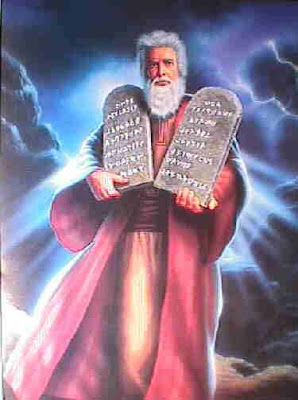

Aseret ha-Dibrot:
The "Ten Commandments"
According to Jewish tradition, G-d gave the Jewish people 613 mitzvot (commandments). All 613 of those mitzvot are equally sacred, equally binding and equally the word of G-d. All of these mitzvot are treated as equally important, because human beings, with our limited understanding of the universe, have no way of knowing which mitzvot are more important in the eyes of the Creator. Pirkei Avot, a book of the Mishnah, teaches "Be as meticulous in performing a 'minor' mitzvah as you are with a 'major' one, because you don't know what kind of reward you'll get for various mitzvot." It also says, "Run after the most 'minor' mitzvah as you would after the most 'important' and flee from transgression, because doing one mitzvah draws you into doing another, and doing one transgression draws you into doing another, and because the reward for a mitzvah is a mitzvah and the punishment for a transgression is a transgression." In other words, every mitzvah is important, because even the most seemingly trivial mitzvot draw you into a pattern of leading your life in accordance with the Creator's wishes, rather than in accordance with your own.
But what about the so-called "Ten Commandments," the words recorded in Exodus 20, the words that the Creator Himself wrote on the two stone tablets that Moses brought down from Mount Sinai (Ex. 31:18), which Moses smashed upon seeing the idolatry of the golden calf (Ex. 32:19)? In the Torah, these words are never referred to as the Ten Commandments. In the Torah, they are called Aseret ha-D'varim (Ex. 34:28, Deut. 4:13 and Deut. 10:4). In rabbinical texts, they are referred to as Aseret ha-Dibrot. The words d'varim and dibrot come from the Hebrew root Dalet-Beit-Reish, meaning word, speak or thing; thus, the phrase is accurately translated as the Ten Sayings, the Ten Statements, the Ten Declarations, the Ten Words or even the Ten Things, but not as the Ten Commandments, which would be Aseret ha-Mitzvot.
The Aseret ha-Dibrot are not understood as individual mitzvot; rather, they are categories or classifications of mitzvot. Each of the 613 mitzvot can be subsumed under one of these ten categories, some in more obvious ways than others. For example, the mitzvah not to work on Shabbat rather obviously falls within the category of remembering the Sabbath day and keeping it holy. The mitzvah to fast on Yom Kippur fits into that category somewhat less obviously: all holidays are in some sense a Sabbath, and the category encompasses any mitzvah related to sacred time. The mitzvah not to stand aside while a person's life is in danger fits somewhat obviously into the category against murder. It is not particularly obvious, however, that the mitzvah not to embarrass a person fits within the category against murder: it causes the blood to drain from your face thereby shedding blood.
List of the Aseret ha-Dibrot
According to Judaism, the Aseret ha-Dibrot identify the following ten categories of mitzvot. Other religions divide this passage differently. See The "Ten Commandments" Controversy below. Please remember that these are categories of the 613 mitzvot, which according to Jewish tradition are binding only upon Jews. The only mitzvot binding upon gentiles are the seven Noahic commandments.
1. Belief in G-d
This category is derived from the declaration in Ex. 20:2 beginning, "I am the L-rd, your G-d..."
2. Prohibition of Improper Worship
This category is derived from Ex. 20:3-6, beginning, "You shall not have other gods..." It encompasses within it the prohibition against the worship of other gods as well as the prohibition of improper forms of worship of the one true G-d, such as worshiping G-d through an idol.
3. Prohibition of Oaths
This category is derived from Ex. 20:7, beginning, "You shall not take the name of the L-rd your G-d in vain..." This includes prohibitions against perjury, breaking or delaying the performance of vows or promises, and speaking G-d's name or swearing unnecessarily.
4. Observance of Sacred Times
This category is derived from Ex. 20:8-11, beginning, "Remember the Sabbath day..." It encompasses all mitzvot related to Shabbat, holidays, or other sacred time.
5. Respect for Parents and Teachers
This category is derived from Ex. 20:12, beginning, "Honor your father and mother..."
6. Prohibition of Physically Harming a Person
This category is derived from Ex. 20:13, saying, "You shall not murder."
7. Prohibition of Sexual Immorality
This category is derived from Ex. 20:13, saying, "You shall not commit adultery."
8. Prohibition of Theft
This category is derived from Ex. 20:13, saying, "You shall not steal." It includes within it both outright robbery as well as various forms of theft by deception and unethical business practices. It also includes kidnapping, which is essentially "stealing" a person.
9. Prohibition of Harming a Person through Speech
This category is derived from Ex. 20:13, saying, "You shall not bear false witness against your neighbor." It includes all forms of lashon ha-ra (sins relating to speech).
10. Prohibition of Coveting
This category is derived from Ex. 20:14, beginning, "You shall not covet your neighbor's house..."
The Two Tablets: Duties to G-d and Duties to People
Judaism teaches that the first tablet, containing the first five declarations, identifies duties regarding our relationship with G-d, while the second tablet, containing the last five declarations, identifies duties regarding our relationship with other people.
You may have noticed, however, that the fifth category, which is included in the first tablet, is the category to honor father and mother, which would seem to concern relationships between people. The rabbis teach that our parents are our creators and stand in a relationship to us akin to our relationship to the Divine. Throughout Jewish liturgy, the Creator is referred to as Avinu Malkeinu, our Father, our King. Disrespect to our biological creators is not merely an affront to them; it is also an insult to the Creator of the Universe. Accordingly, honor of father and mother is included on the tablet of duties to G-d.
These two tablets are parallel and equal: duties to G-d are not more important than duties to people, nor are duties to people more important than duties to G-d. However, if one must choose between fulfilling an obligation to G-d and fulfilling an obligation to a person, of if one must prioritize them, Judaism teaches that the obligation to a person should be fulfilled first. This principle is supported by the story in Genesis 18, where Abraham is communing with G-d and interrupts this meeting to fulfill the mitzvah of providing hospitality to strangers (the three men who appear). The Talmud gives another example, disapproving of a man who, engrossed in prayer, would ignore the cries of a drowning man. When forced to choose between our duties to a person and our duties to G-d, we must pursue our duties to the person, because the person needs our help, but G-d does not need our help.
The "Ten Commandments" Controversy
In the United States, a controversy has persisted for many years regarding the placement of the "Ten Commandments" in public schools and public buildings. But one critical question seems to have escaped most of the public dialog on the subject: Whose "Ten Commandments" should we post?
The general perception in this country is that the "Ten Commandments" are part of the common religious heritage of Judaism, Catholicism and Protestantism, part of the sacred scriptures that we all share, and should not be controversial. But most people involved in the debate seem to have missed the fact that these three religions divide up the commandments in different ways! Judaism, unlike Catholicism and Protestantism, considers "I am the L-rd, your G-d" to be the first "commandment." Catholicism, unlike Judaism and Protestantism, considers coveting property to be separate from coveting a spouse. Protestantism, unlike Judaism and Catholicism, considers the prohibition against idolatry to be separate from the prohibition against worshipping other gods. No two religions agree on a single list. So whose list should we post?
And once we decide on a list, what translation should we post? Should Judaism's sixth declaration be rendered as "Thou shalt not kill" as in the popular KJV translation, or as "Thou shalt not murder," which is a bit closer to the connotations of the original Hebrew though still not entirely accurate?
These may seem like trivial differences to some, but they are serious issues to those of us who take these words seriously. When a government agency chooses one version over another, it implicitly chooses one religion over another, something that the First Amendment prohibits. This is the heart of the controversy.
But there is an additional aspect of this controversy that is of concern from a Jewish perspective. In Talmudic times, the rabbis consciously made a decision to exclude daily recitation of the Aseret ha-Dibrot from the liturgy because excessive emphasis on these statements might lead people to mistakenly believe that these were the only mitzvot or the most important mitzvot, and neglect the other 603 (Talmud Berakhot 12a). By posting these words prominently and referring to them as "The Ten Commandments," (as if there weren't any others, which is what many people think) schools and public buildings may be teaching a message that Judaism specifically and consciously rejected.


